Healing Through Connection: What Neuroscience Reveals About Therapy
"The most powerful medicine in psychotherapy may not be a technique. It may be another nervous system."
For decades, psychotherapy research has consistently shown that the therapeutic relationship is one of the strongest predictors of positive treatment outcomes. Regardless of the modality—whether cognitive behavioral therapy (CBT), EMDR, psychodynamic therapy, Internal Family Systems (IFS), or somatic therapies—the quality of the relationship between therapist and client consistently predicts healing more than any specific intervention.
But why?
What is happening biologically between two people sitting together in a therapy room?
Emerging research from social neuroscience offers an intriguing answer: our brains literally begin to synchronize.
The Brain Is a Social Organ
For much of modern neuroscience, the brain was viewed as an isolated processor—a computer tucked safely inside the skull. Today, that perspective is changing.
Increasingly, researchers recognize that the brain evolved not simply to think, but to connect. Human brains continuously adapt to the people around us, adjusting through subtle exchanges of facial expressions, eye contact, voice tone, body posture, and shared attention.
This process has become known as interpersonal neural synchrony, or brain-to-brain coupling.
Using technologies such as hyperscanning EEG and functional near-infrared spectroscopy (fNIRS), researchers can now measure the activity of two brains simultaneously while people interact.
What they have discovered is remarkable.
During meaningful conversations, collaboration, teaching, music, and even handholding, two people's brains begin to display remarkably similar patterns of neural activity.
In other words, healthy relationships are not simply emotionally synchronizing—they are neurologically synchronizing.
We Heal in Relationship Because Our Brains Were Built For It
One of the landmark studies by Stephens and colleagues (2010) demonstrated that when one person tells a story and another genuinely listens, the listener's brain activity begins to mirror the speaker's across multiple brain regions.
The greater this synchronization, the better the listener understood the speaker.
Later work by Hasson and colleagues expanded this finding, proposing that brain-to-brain coupling is one of the primary mechanisms by which humans create shared understanding and social connection.
This is profound. Communication is not simply the transfer of information. It is the gradual alignment of two nervous systems.
Trauma Interrupts Synchrony
Trauma changes the way we relate to other people. The nervous system becomes organized around protection rather than connection. For many trauma survivors, eye contact feels overwhelming. Trust feels dangerous. The body remains vigilant for signs of rejection, criticism, or abandonment. Rather than synchronizing with another person, the nervous system stays prepared for threat.
This makes sense. The brain learns from experience. When relationships have been unsafe, the nervous system adapts by expecting future relationships to be unsafe as well. Many of the symptoms we associate with trauma—including hypervigilance, emotional numbing, dissociation, and difficulty trusting others—can be understood as disruptions in interpersonal regulation. The nervous system has learned that connection is risky.
Therapy Offers a Different Experience
A skilled therapist offers something that may have been missing earlier in life: a consistently regulated nervous system. Session after session, the therapist listens without judgment, remains emotionally present, responds with curiosity rather than criticism, and stays grounded during difficult emotional experiences. These repeated moments create something powerful.
The client begins borrowing the therapist's regulation. Over time, that borrowed regulation becomes internalized.This idea has long existed within attachment theory and developmental psychology under the concept of co-regulation.
Brain synchrony research offers a possible neurobiological explanation for how this process unfolds. As therapist and client become emotionally attuned, their brains may literally begin coordinating activity. The therapist is not simply offering insight. They are offering a nervous system that the client's nervous system can safely connect with.
The Therapeutic Alliance Is a Biological Process
Researchers studying psychotherapy have begun investigating whether therapist and client brains synchronize during successful treatment.
Although the field is still in its early stages, emerging research suggests that greater neural synchrony between therapist and client is associated with a stronger therapeutic alliance, deeper empathy, and a richer emotional understanding. Studies also indicate that moments of heightened synchrony often coincide with therapeutic insight and may contribute to better overall treatment outcomes. While much remains to be explored, these findings offer a compelling glimpse into the neurobiological processes that may underlie the healing power of human connection. Perhaps what clients often describe as "feeling understood" is more than a subjective experience. It may reflect measurable changes occurring between two brains in real time.
Rewiring Through Repeated Connection
Neuroplasticity reminds us that the brain changes through repeated experience rather than isolated moments. Each therapy session offers the nervous system another opportunity to experience safety instead of danger, curiosity instead of shame, attunement instead of neglect, and regulation instead of chaos. Over time, these consistent relational experiences begin to reshape neural pathways, gradually replacing patterns organized around survival with those that support trust, emotional resilience, and connection. Over months or years, these repeated relational experiences gradually reshape neural pathways. Healing is not simply learning to think differently. Healing is learning to relate differently. The therapeutic relationship becomes the environment in which the brain discovers that connection no longer has to mean danger.
Why the Relationship Matters
Clients sometimes wonder why talking to a therapist each week can make such a profound difference. The answer may lie in something deeper than conversation. Humans evolved as profoundly social beings. Our brains develop in relationship, become dysregulated in relationship, and often heal in relationship. The therapist is not "fixing" the client. Rather, two nervous systems meet in a space of safety, consistency, and compassion. Over time, the client's brain begins to experience something it may have rarely known before: connection without fear.
Perhaps that is one of psychotherapy's greatest gifts.
Not simply new insight.
Not simply symptom reduction.
But the gradual experience of discovering that another human being can be trusted—and that, in the presence of that trust, the brain itself begins to change.
References
Goldstein, P., et al. (2018). Brain-to-brain coupling during handholding is associated with pain reduction.Proceedings of the National Academy of Sciences, 115(11), E2528–E2537.
Hasson, U., Ghazanfar, A. A., Galantucci, B., Garrod, S., & Keysers, C. (2012). Brain-to-brain coupling: A mechanism for creating and sharing a social world. Trends in Cognitive Sciences, 16(2), 114–121.
Koole, S. L., & Tschacher, W. (2016). Synchrony in psychotherapy: A review and an integrative framework for the therapeutic alliance. Frontiers in Psychology, 7, 862.
Leong, V., et al. (2017). Speaker gaze increases information coupling between infant and adult brains. Proceedings of the National Academy of Sciences, 114(50), 13290–13295.
Stephens, G. J., Silbert, L. J., & Hasson, U. (2010). Speaker-listener neural coupling underlies successful communication. Proceedings of the National Academy of Sciences, 107(32), 14425–14430.
The Runner's Mind: Using Clinical Hypnotherapy to Improve Performance
When I began training for my first marathon, I sought advice from anyone with experience. I received thoughtful guidance on nutrition, hydration, sleep, pacing strategies, and training plans—practical recommendations that help me form the foundation of my preparation. While each was valuable, one piece of advice stood apart.
A fellow therapist and experienced runner encouraged me to train not only my body, but my mind. She suggested incorporating visualization into my preparation by regularly imagining myself running with strength and composure, navigating difficult moments with confidence, and ultimately crossing the finish line. At the time, it seemed almost too simple to make a meaningful difference. Yet that conversation introduced me to an often-overlooked aspect of endurance training: the brain can be trained alongside the body.
Only later did I come to appreciate that this practice was more than positive thinking. Mental imagery and visualization engage many of the same neural circuits involved in physical movement, priming the brain for performance before a single step is taken.
Many elite athletes have long incorporated mental imagery and clinical hypnosis into their training. These techniques are used not only to enhance performance but also to improve concentration, regulate pre-competition anxiety, manage pain associated with injury, and even support the recovery process. Increasingly, research in sport psychology and neuroscience suggests that mental training is not merely complementary to physical training—it is an integral component of optimizing athletic performance.
What is clinical hypnosis?
Clinical hypnosis has been used as an adjunctive therapeutic intervention in the treatment of trauma, anxiety, and a variety of psychological and medical conditions for more than two centuries (Spiegel, 2013). Rather than inducing an altered state of consciousness, hypnosis is generally understood as a state of highly focused attention accompanied by increased absorption and responsiveness to therapeutic suggestion (Hammond, 1998). During hypnosis, attention becomes less fragmented by competing internal and external stimuli, allowing individuals to engage more deeply with specific thoughts, sensations, or therapeutic goals.
This heightened state of focused awareness can facilitate cognitive and emotional flexibility, making it easier to modify maladaptive beliefs, regulate emotional responses, and strengthen adaptive patterns of thinking and behavior. As Yapko (2012) suggests, hypnosis is most effective not because it imposes change, but because it amplifies an individual's existing capacities, helping people access internal resources, develop resilience, and discover strengths that may otherwise remain outside conscious awareness.
Although hypnosis has traditionally been studied in the treatment of trauma and anxiety, these same mechanisms of focused attention, enhanced learning, and neuroplasticity have increasingly been applied to athletic performance. For runners, hypnosis offers a way to refine mental skills such as concentration, confidence, pain regulation, and emotional resilience—psychological capacities that often distinguish good performances from exceptional ones.
The Neurobiology of Hypnosis
Hypnosis has long been misunderstood as a mysterious or passive state in which individuals lose control of their thoughts or actions. Contemporary neuroscience offers a different perspective. Rather than diminishing consciousness, hypnosis appears to reorganize how the brain allocates attention, processes sensory information, and regulates perception. During hypnosis, the brain becomes exceptionally efficient at filtering competing stimuli and sustaining focused attention, creating an ideal environment for learning, behavior change, and emotional regulation.
Attention Networks
One of the defining features of hypnosis is its effect on attention. Neuroimaging studies consistently demonstrate increased engagement of the dorsal attention network, a system responsible for sustaining goal-directed focus while reducing interference from distracting internal and external stimuli.
This narrowing of attention allows individuals to become deeply immersed in therapeutic suggestions, mental imagery, or motor rehearsal.
The dorsolateral prefrontal cortex (DLPFC) is one of the brain's primary executive control centers, supporting planning, decision-making, self-regulation, and cognitive flexibility. Research by David Spiegel and colleagues suggests that hypnosis alters communication between the DLPFC and regions involved in self-monitoring, allowing attention to become more focused and less disrupted by self-doubt or distraction.
For athletes, this may facilitate sustained concentration while reducing cognitive interference from doubt or distraction.
Pain Modulation
One of the most extensively researched applications of clinical hypnosis is pain modulation. Brain imaging studies demonstrate that hypnosis can alter activity within networks involved in both the sensory and emotional dimensions of pain. Rather than eliminating discomfort, hypnosis appears to change the brain's interpretation of it, reducing its emotional intensity. For endurance athletes, this distinction is particularly meaningful. The goal is not to ignore pain that signals injury, but to become less reactive to the normal discomfort associated with sustained effort.
Predictive processing
One emerging theory proposes that hypnosis works by modifying the brain's predictive models. These expectations influence perception before sensory information is fully processed. The brain is constantly generating expectations about pain, effort, movement, emotions, and bodily sensations. Hypnotic suggestion may temporarily increase the precision of therapeutic expectations, allowing new interpretations of sensory information to emerge.
For example:
Instead of interpreting increased heart rate as anxiety,
the brain may reinterpret it as excitement.
Instead of viewing muscle fatigue as a signal to stop,
it may be experienced as evidence of productive effort.
Neuroplasticity
Repeated hypnotic practice strengthens neural pathways through experience-dependent neuroplasticity. Each hypnotic session reinforces neural networks involved in emotional regulation, attentional control, confidence, motor learning, and behavioral consistency.
Like physical exercise, hypnosis relies upon repetition.
The more frequently adaptive neural circuits are activated, the more efficient they become.
One of the most powerful aspects of hypnosis is guided imagery.
Functional MRI studies demonstrate that vividly imagining movement activates many of the same brain networks used during actual running, including regions involved in motor planning, coordination, timing, and movement initiation. Specifically, motor imagery engages the supplementary motor area, premotor cortex, cerebellum, basal ganglia, and, to a lesser extent, the primary motor cortex. Repeated mental rehearsal may therefore strengthen the neural pathways that support efficient movement, making visualization a valuable complement to physical training.
For runners, mentally rehearsing efficient form, maintaining pace, or successfully finishing a race may strengthen the neural representations that support these behaviors during competition.
One of the strongest pieces of evidence supporting the use of hypnosis in sport comes from a 2025 systematic review published in the International Review of Sport and Exercise Psychology. After evaluating 13 studies across a variety of sports, the authors found that therapeutic hypnosis was consistently associated with improvements in athletic performance, enhanced recovery from injury, and reductions in sport-related psychological distress, including competitive anxiety. Although the overall methodological quality of the studies was moderate and many used uncontrolled designs, the findings suggest that hypnosis may be a valuable adjunct to physical training by strengthening the psychological skills that contribute to peak performance. The authors concluded that larger, well-designed randomized controlled trials are needed to better understand the efficacy and mechanisms of hypnosis in athletic populations.
Why This Matters For Runners
Running is not simply a physical task—it is a neurobiological one. Every stride is influenced by the brain's regulation of attention, movement, emotion, pain, and effort. Clinical hypnosis offers a method of intentionally training these systems. By improving attentional control, reducing self-critical internal dialogue, enhancing emotional regulation, and reinforcing efficient motor patterns, hypnosis may help runners perform closer to their physiological potential.
That conversation before my first marathon changed far more than my approach to racing—it changed the way I understood performance itself. Since then, hypnosis has become a regular part of both my running and my clinical practice. Over the years, I became formally trained and certified in clinical hypnosis, motivated by a desire to better understand why the techniques that helped me felt so effective.
As both a therapist and a runner, I have come to appreciate that peak performance is rarely limited by the body alone. The brain shapes how we interpret effort, regulate emotion, sustain attention, and respond to discomfort. Training those systems intentionally can be just as valuable as logging another mile.
While hypnosis is not a substitute for consistent physical training, the emerging evidence suggests it may be a powerful complement. Just as runners strengthen their cardiovascular system through repeated miles, they can strengthen the mental processes that support resilience, confidence, and performance. The mind, like the body, adapts to training.
You do not need to be an elite athlete to benefit from hypnosis. Many runners begin by practicing brief sessions before workouts or races that combine relaxation with mental rehearsal. Visualizing efficient running form, maintaining composure during fatigue, or crossing the finish line can strengthen the same neural pathways engaged during physical performance. Like any skill, the effects develop through consistent practice.
References:
Hammond, D. C. (2007). Hypnosis, placebos, and systematic research bias in biological
psychiatry. American Journal of Clinical Hypnosis, 50(1), 37–47.
https://doi.org/10.1080/00029157.2007.10401596Miró, A., Mesperuza, M., Jensen, M. P., Day, M. A., García, F., & Miró, J. (2025). Therapeutic Hypnosis and Sports Performance: A systematic review. International Review of Sport and Exercise Psychology, 1–21. https://doi.org/10.1080/1750984x.2025.2512535
Spiegel, D. (2013). Tranceformations: Hypnosis in brain and body. Depression and Anxiety, 30,
342–542. https://doi.org/10.1002/da.22046
Yapko, M. (2012). Trancework: An introduction to the practice of clinical hypnosis (4th ed.).
New York, NY: Brunner-Routledge.
Expanded Consciousness: A Path to Freedom
Trauma can narrow consciousness, directing our attention toward potential threats while limiting access to curiosity, creativity, and connection. Rather than experiencing the world with openness and flexibility, the nervous system becomes organized around protection instead of possibility. Hypervigilance, emotional reactivity, emotional numbing, or dissociation are not signs of weakness—they are adaptive survival responses that once helped us survive.
Healing is, in many ways, the gradual expansion of consciousness.
The term expanded consciousness often evokes mystical experiences or altered states. While I believe those experiences can hold profound meaning and have an important place in cultivating presence and wonder, that is not the focus of this discussion. Here, expanded consciousness refers to an increased capacity for awareness—a broader ability to observe our thoughts, emotions, bodily sensations, beliefs, and habitual patterns without becoming overwhelmed by them. It is the movement from automatic reaction toward intentional response, from rigid survival strategies toward greater psychological flexibility.
As consciousness expands, so does freedom.
We become less identified with our thoughts and more capable of observing them. We begin to recognize that emotions are experiences to move through rather than identities to inhabit. We notice familiar patterns before they become automatic behaviors. Instead of being driven by unconscious conditioning, we gain the ability to choose responses that align with our values and with the life we hope to create.
This shift is not merely philosophical—it is grounded in neurobiology. The brain is continuously predicting, filtering, and interpreting sensory information through a process often described as predictive processing. Rather than passively receiving information, the brain actively constructs our experience of reality by comparing incoming sensory information with expectations formed from past experiences.
When trauma occurs, these predictive models become biased toward danger. The amygdala becomes increasingly sensitive to potential threats, while regions of the prefrontal cortex responsible for executive functioning, emotional regulation, and cognitive flexibility become less effective at modulating fear responses. At the same time, the hippocampus—which helps distinguish past memories from present experience—may have difficulty accurately contextualizing new information. As a result, the nervous system can respond to present-day situations as though they were extensions of past danger.
These adaptations are not signs of dysfunction—they are signs of survival. The brain has become exceptionally efficient at protecting us. The difficulty arises when protective neural circuits remain chronically activated long after the threat has passed, limiting our capacity for curiosity, exploration, creativity, and authentic connection.
Fortunately, the brain remains remarkably adaptable throughout life. Through neuroplasticity, repeated experiences of safety, mindfulness, psychotherapy, hypnosis, meaningful relationships, movement, and time in nature strengthen neural networks associated with regulation and resilience. Functional connectivity between the prefrontal cortex and the amygdala improves, allowing for greater top-down regulation of emotional responses. The salience network becomes more balanced, helping the brain distinguish genuine threats from everyday experiences, while the default mode network—often associated with self-referential thinking and rumination—becomes less dominant. This creates greater capacity for present-moment awareness and flexible attention. Meanwhile, the hippocampus continues integrating new experiences, allowing the brain to update old predictions and recognize that the present is no longer the past.
As these brain networks become more integrated, consciousness itself expands. Awareness is no longer monopolized by survival. Instead of being confined by automatic protective responses, we gain access to curiosity, creativity, compassion, insight, and genuine connection. We develop the capacity to observe our experience rather than become consumed by it. In doing so, we become increasingly free to choose our responses instead of being governed by conditioned reactions.
Perhaps this is the deepest form of freedom—not freedom from life's inevitable challenges, but freedom from being unconsciously governed by them. Expanded consciousness does not eliminate suffering, but it transforms our relationship to it. It allows us to meet life with greater presence, intention, flexibility, and openness.
This Fourth of July, as we celebrate the freedoms that shape our nation, we might also reflect on another kind of independence—the quiet freedom that emerges when awareness expands, the nervous system finds safety, and the mind is no longer organized around fear. Perhaps the greatest freedom is not the ability to do whatever we choose, but the ability to consciously choose who we become.
Balance Is Not a Destination—It Is a Dynamic Process
What does it mean to live in balance? Balance is often conceptualized as a state to be achieved—a point at which competing demands are perfectly managed and life feels consistently stable. From a clinical perspective, however, psychological balance is better understood as a dynamic process of ongoing self-regulation and adaptation. It is not a static condition, but the capacity to respond flexibly to internal and external stressors while maintaining overall well-being.
Human functioning depends on the interplay of multiple systems—physiological, emotional, cognitive, relational, and behavioral. When one domain consistently receives disproportionate attention, dysregulation often follows. Chronic stress, excessive productivity, insufficient rest, or prolonged emotional suppression can contribute to symptoms of anxiety, depression, burnout, and feelings of disconnection from oneself and others.
Contemporary neuroscience and trauma research suggest that resilience is not characterized by the absence of stress, but by the ability to return to a state of relative equilibrium following periods of activation. In other words, psychological health is less about avoiding imbalance and more about cultivating the capacity for restoration and self-correction.
Balance does not imply equal distribution of time or energy across all areas of life. Rather, it requires attunement to changing circumstances and the flexibility to prioritize what is most necessary in a given season. Periods of increased professional demand, caregiving responsibilities, grief, or healing may require different allocations of attention and resources. Adaptive functioning involves recognizing these shifts and responding accordingly.
Evidence-based practices that support psychological balance include:
Regular physical activity, which promotes emotional regulation and stress reduction.
Adequate sleep and recovery, essential for cognitive and physiological functioning.
Time spent in natural environments, which has been associated with reduced stress and improved mood.
Healthy interpersonal boundaries and meaningful social connection.
Mindfulness and reflective practices that enhance self-awareness and emotional regulation.
Self-compassion, which has been shown to reduce shame and support resilience during periods of stress.
Importantly, periods of disequilibrium should not be viewed as indicators of failure. Fluctuations in functioning are inherent to the human experience. The goal is not to maintain constant stability, but to develop the awareness and capacity to recognize when we have moved outside our optimal range and engage in practices that facilitate a return to balance.
Ultimately, balance is not the absence of stress or struggle. It is the ongoing process of maintaining flexibility, supporting self-regulation, and adapting to life's inevitable changes in ways that promote psychological and physiological well-being.
Reflection
Rather than asking, "How do I maintain perfect balance?" a more clinically useful question may be, "What do I need in this moment to restore regulation and support my overall well-being?"
Nature as a Catalyst for Expanded Awareness
How Time Outdoors Affects Consciousness and Well-Being
For most of human history, our ancestors lived immersed in the natural world. They woke with the sun, moved across varied landscapes, and remained intimately connected to the rhythms of seasons, weather, and ecosystems. Today, however, many people spend the majority of their lives indoors, surrounded by screens, artificial lighting, and constant digital stimulation.
As rates of anxiety, depression, and chronic stress continue to rise, researchers are increasingly asking an important question: What happens to human consciousness when we become disconnected from nature?
The answer may reveal that nature is far more than a pleasant backdrop for recreation. It may be one of the most powerful catalysts for expanded awareness, psychological well-being, and healing.
The Attention Restoration Effect
Modern environments place enormous demands on our attention. Emails, notifications, traffic, advertisements, and endless streams of information continually compete for our focus. This constant cognitive load can leave us mentally fatigued and emotionally depleted.
Natural environments appear to have the opposite effect.
Environmental psychologists have proposed the Attention Restoration Theory, which suggests that nature gently captures our attention without overwhelming it. Watching waves roll onto shore, observing leaves move in the wind, or listening to birdsong engages the mind in what researchers call "soft fascination." Unlike digital stimulation, these experiences allow the brain's directed attention systems to rest and recover.
As mental noise quiets, many people report feeling more present, aware, and connected to their surroundings.
From Thinking to Experiencing
One of the defining characteristics of modern consciousness is overthinking.
Many individuals spend much of their day lost in thoughts about the past, worries about the future, or endless internal narratives. While reflection is an important human capacity, excessive mental activity can contribute to anxiety, depression, and feelings of disconnection.
Nature invites a different mode of consciousness.
When we walk through a forest, watch a sunset, or run along a trail, our attention naturally shifts toward direct sensory experience. We begin noticing the feeling of wind against our skin, the rhythm of our breath, the scent of pine trees, or the sound of water moving over rocks.
In these moments, awareness expands beyond thought. Rather than analyzing life, we begin experiencing it.
Nature and the Nervous System
From a trauma-informed perspective, nature offers something equally important: nervous system regulation.
The human stress response evolved in natural environments. Our brains and bodies developed in relationship with green spaces, open landscapes, and natural rhythms. As a result, many natural settings appear to signal safety to the nervous system.
Research has found that spending time in nature can reduce stress hormones, lower blood pressure, improve mood, and decrease physiological markers of stress.
When the nervous system shifts out of chronic survival mode, consciousness often changes as well. People frequently report feeling calmer, more grounded, and more connected to themselves and others.
This shift is particularly relevant for individuals recovering from trauma, whose awareness may become narrowed by hypervigilance and threat detection. Nature can help create the conditions for a broader, more flexible experience of consciousness.
Awe and Expanded Awareness
Perhaps one of nature's most profound effects is its ability to evoke awe.
Standing beneath a canopy of ancient trees, gazing at a mountain range, or watching the night sky can produce a sense of wonder that feels larger than the self.
Psychologists have found that awe experiences often reduce self-focused thinking and increase feelings of connection, meaning, and belonging.
In these moments, personal worries may temporarily recede. Awareness expands beyond individual concerns and into a larger sense of participation in life itself.
Many people describe these experiences as deeply healing—not because their problems disappear, but because their perspective changes.
Reconnecting With What We Are
The growing field of ecopsychology suggests that many forms of psychological suffering may be linked, at least in part, to our separation from the natural world.
Humans are not separate from nature; we are expressions of it.
When we spend time outdoors, we often experience more than relaxation. We remember something fundamental about ourselves. We reconnect with rhythms that existed long before smartphones, social media, and modern schedules.
Nature invites us out of distraction and into presence.
It quiets mental chatter, regulates the nervous system, restores attention, and creates opportunities for awe. In doing so, it expands consciousness—not by adding something new, but by helping us reconnect with a deeper awareness that has been there all along.
Lucid Dreaming and PTSD: Reclaiming Agency While You Sleep
For many people living with PTSD, sleep is anything but restful. Nightmares, hypervigilance, and repeated awakenings can turn the night into an extension of the trauma itself. Yet emerging research suggests that one unusual phenomenon—lucid dreaming—may offer a pathway toward healing.
Lucid dreaming occurs when a person becomes aware that they are dreaming while still asleep. In some cases, the dreamer can even influence or change the dream narrative. What was once considered a fringe topic has increasingly become the subject of serious neuroscientific research, particularly for its potential role in treating trauma-related nightmares. A recent study by Delorme and colleagues explored the relationship between lucid dreaming and sleep characteristics in individuals experiencing chronic PTSD symptoms. Their findings offer intriguing insights into how the sleeping brain may support recovery from trauma.
What the Researchers Found
The study analyzed more than 160 nights of sleep data collected from participants with PTSD symptoms using portable EEG devices that measured brain activity during sleep. Researchers compared nights in which participants reported lucid dreams with nights in which they did not.
Several sleep patterns stood out.
First, individuals who fell asleep more quickly were more likely to experience lucid dreams. Longer sleep onset latency—the amount of time it takes to fall asleep—was associated with a lower likelihood of lucidity.
Second, lucid dreaming was associated with more fragmented sleep. Participants who spent more time awake after initially falling asleep were more likely to report lucid dreams. While disrupted sleep is often viewed negatively, these brief awakenings may increase awareness during transitions between sleep stages, creating conditions that support lucidity.
Finally, researchers found that lucid dreaming was associated with lower levels of delta brainwave activity during REM sleep. Lower delta activity may reflect a state of heightened awareness within the dream, allowing the dreamer to recognize that they are dreaming.
Why This Matters for Trauma Survivors
PTSD often disrupts sleep in profound ways. Many trauma survivors experience chronic insomnia, difficulty falling asleep, nightmares, and repeated awakenings throughout the night. These symptoms are frequently viewed as obstacles to recovery.
Yet this study suggests a more nuanced picture. Some of the very sleep disruptions that characterize PTSD may also create opportunities for lucid dreaming. When individuals become aware they are dreaming, they may be able to interact differently with traumatic dream content rather than experiencing it as helpless victims.
Imagine a recurring nightmare in which a person is chased, trapped, or overwhelmed. Within a lucid dream, that same individual may recognize, "This is a dream." That moment of awareness can create enough psychological distance to change the experience. Some dreamers report confronting threatening figures, asking questions of dream characters, transforming frightening scenes, or simply waking themselves up.
From a trauma-informed perspective, these experiences may represent something deeply important: the restoration of agency.
Lucid Dreaming and Reclaiming Agency
One of the hallmarks of traumatic experiences is a profound loss of control. Trauma often leaves individuals feeling powerless, disconnected from themselves, and trapped in patterns of fear long after the original event has ended.
Healing frequently involves reclaiming a sense of choice, self-efficacy, and connection. In this way, lucid dreaming may offer more than symptom relief. It may provide a unique opportunity to practice agency in a space where traumatic memories often continue to play out.
Unlike traditional exposure-based therapies, lucid dreaming occurs within the dream state itself. Individuals can engage with difficult emotions and imagery while remaining aware that they are safe. This awareness may help reduce fear and create new experiences of mastery within previously overwhelming dream scenarios.
An Integrative Mental Health Perspective
As interest in integrative approaches to mental health continues to grow, lucid dreaming occupies an interesting intersection of neuroscience, consciousness research, and trauma healing.
The findings from this study suggest that sleep is not simply a passive state where symptoms emerge. It may also be a space where healing processes unfold. Understanding the relationship between sleep architecture, brain activity, and awareness during dreams could eventually help clinicians develop new approaches to nightmare treatment and trauma recovery.
While more research is needed, lucid dreaming offers a compelling possibility: that within the very dreams that haunt us may exist opportunities for transformation.
For trauma survivors, healing often begins with the realization that they are no longer powerless. Lucid dreaming may provide one more avenue for discovering that truth—even while asleep.
References
Delorme, A., Yount, G., Jaoude, M. A., Aimone, C., Taddeo, S., Stumbrys, T., Cannard, C., & Wahbeh, H. Lucid Dreaming and Sleep Characteristics in PTSD.
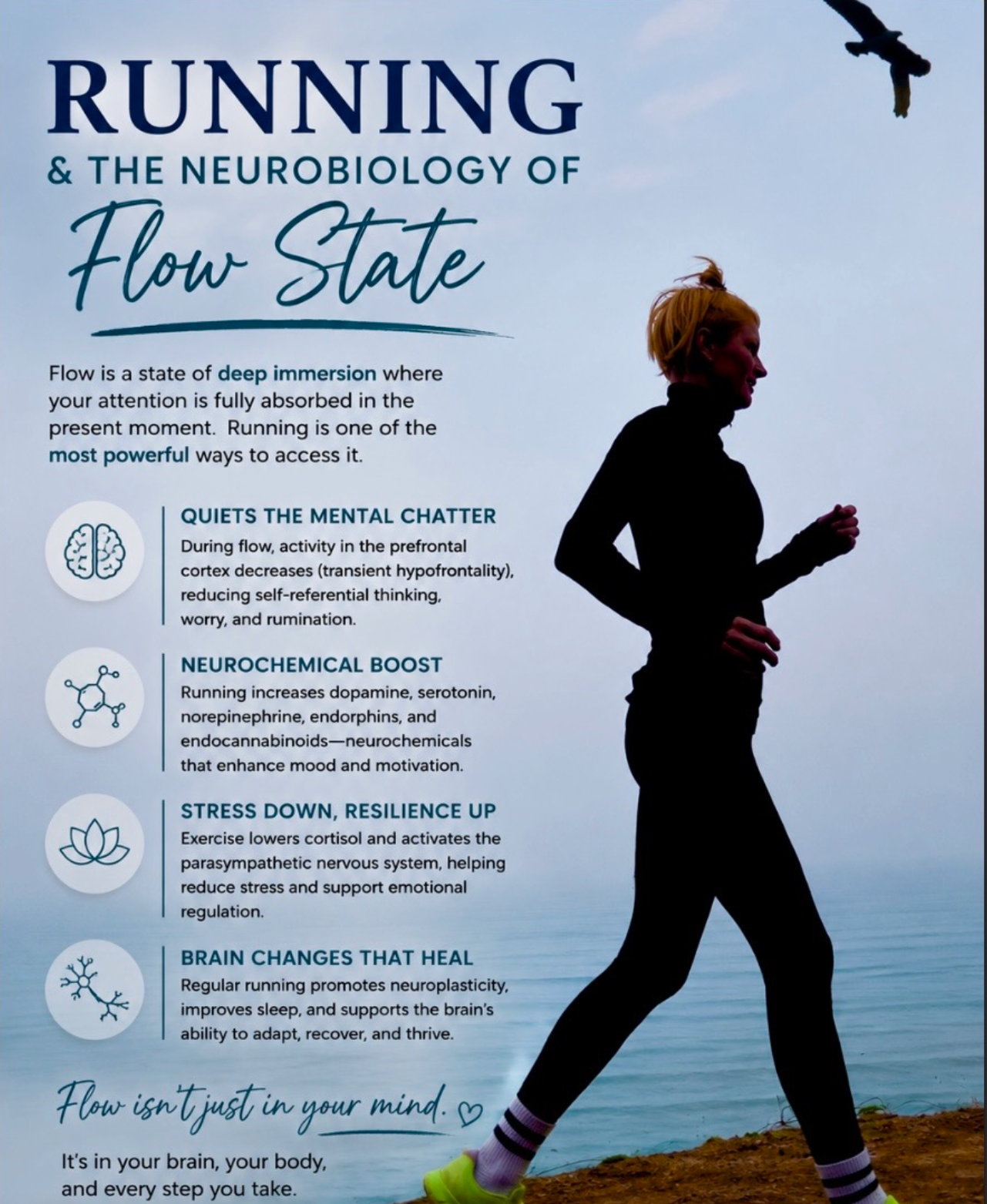
Running, Flow State, and Mental Health: When We Stop Thinking and Start Being
It happened on a run recently.
Nothing extraordinary was happening. There was no personal best, no breakthrough workout, no dramatic moment of triumph. I was simply moving through my neighborhood, my feet hitting the pavement in a familiar rhythm. Somewhere along the way, I stopped thinking about the emails I needed to answer, the tasks waiting at home, and the endless list of things demanding my attention.
I became absorbed in the run itself.
The sound of my breath. The feeling of my body moving. The sensation of the sun on my skin. Time seemed to disappear. This is my favorite part of running.
Psychologists call this a flow state.
First described by Mihaly Csikszentmihalyi, flow is a state of deep immersion in an activity. During flow, attention becomes fully focused on the present moment. Self-consciousness fades, distractions fall away, and performance often feels effortless, even when the task itself is challenging.
For runners, flow can feel almost magical. Yet what is happening is grounded in neuroscience.
When we enter a flow state, activity in parts of the prefrontal cortex temporarily decreases, a phenomenon researchers sometimes refer to as transient hypofrontality. This reduction in activity quiets the mental chatter that often dominates our lives—the inner critic, the constant planning, the worries about the future, and the replaying of the past.
For many of us, especially those struggling with anxiety, depression, trauma, or chronic stress, that mental chatter can be exhausting.
Flow offers a brief but powerful reprieve.
Running is uniquely suited to creating the conditions for flow. It provides a clear goal—keep moving forward. It offers immediate feedback through breathing, pace, and bodily sensations. It requires enough challenge to engage us but, when matched to our abilities, not so much challenge that we become overwhelmed.
This balance is key.
Flow tends to occur when the demands of an activity closely match our skill level. Too little challenge leads to boredom. Too much challenge leads to anxiety. But in that sweet spot between the two, something remarkable can happen.
We become fully present.
From a mental health perspective, this matters.
Many of the clients I work with describe feeling trapped in their heads. They are constantly analyzing, anticipating, and managing. Trauma survivors often remain vigilant, scanning for danger even when they are objectively safe. Individuals struggling with depression may become caught in cycles of rumination, repeatedly revisiting painful thoughts and memories.
Flow interrupts these patterns.
Rather than focusing on what happened yesterday or what might happen tomorrow, attention becomes anchored in what is happening right now. The mind has less bandwidth available for rumination because it is fully occupied with the task at hand.
Running also triggers a cascade of neurochemical changes that support psychological well-being. Endorphins, endocannabinoids, dopamine, serotonin, and norepinephrine all play a role in enhancing mood, motivation, and emotional regulation. Over time, the brain begins to associate the effort of running with the reward of feeling better.
This is one of the reasons running can become such a powerful mental health practice.
Not because it helps us escape ourselves.
Because it helps us reconnect with ourselves.
When people think about mental health, they often focus on reducing symptoms. While that is important, mental health is also about cultivating moments of vitality, engagement, meaning, and connection. Flow provides exactly that.
And perhaps one of the most beautiful aspects of flow is that it reconnects us not only to ourselves but also to something larger.
When I'm in flow on a run, I notice the world differently. I hear the birds. I feel the changing seasons. I exchange a smile with another runner stopped at a traffic light. The barriers between myself and the world seem a little thinner.
For a moment, I am not thinking about life.
I am simply living it.
In a culture that constantly pulls our attention in a hundred different directions, flow may be one of the most valuable mental health interventions available to us. It doesn't require a prescription, a complicated protocol, or a perfect mindset.
Sometimes it begins with something as simple as lacing up your running shoes, stepping outside, and allowing yourself to become fully immersed in the next step, and then the one after that.
The run ends.
The flow state fades.
But often we return home feeling calmer, clearer, more connected, and a little more ourselves than when we left.
And in today's world, that's no small thing.
References:
Dietrich, A. (2004). Neurocognitive mechanisms underlying the experience of flow. Consciousness and Cognition, 13(4), 746–761.
Gold, J., & Ciorciari, J. (2020). A review on the role of the neuroscience of flow states in the modern world. Behavioral Sciences, 10(9), 137.
Heijnen, S., Hommel, B., Kibele, A., & Colzato, L. (2016). Neuromodulation of aerobic exercise—A review. Frontiers in Psychology, 6, 1890.
Trauma, Prediction, and the Flow State: Why the Body May Not “Keep the Score” After All
For years, trauma discourse has been shaped by a powerful phrase popularized by Bessel van der Kolk: the body keeps the score. The phrase resonated because it captured something many trauma survivors viscerally understand — trauma is not merely remembered cognitively. It is felt physiologically. It emerges in tension patterns, chronic hypervigilance, dissociation, pain, exhaustion, panic, and emotional reactivity that often seem to bypass conscious thought entirely.
But a recent paper published in Frontiers in Systems Neuroscience challenges this framing in a provocative way. The authors argue that trauma is not literally “stored” in the body, but rather dynamically reconstructed through predictive processes occurring across the brain-body system.
At first glance, this may sound dismissive of somatic experience. But I believe the deeper implication is actually more hopeful.
Because if trauma is not a fixed imprint trapped in the body, then healing may not require endlessly excavating the past. It may instead involve restoring flexibility, adaptability, and the nervous system’s capacity to move fluidly between states.
In other words: healing may be less about remembering and more about regaining flow.
The Predictive Brain
Modern neuroscience increasingly suggests that the brain is not a passive recorder of reality. It is a prediction machine.
Your nervous system is constantly generating expectations about what is about to happen based on prior experience. The brain uses these predictions to determine:
what is safe,
what is dangerous,
where attention should go,
what sensations mean,
and how the body should respond.
This framework is known as predictive processing.
When someone experiences trauma — especially chronic or developmental trauma — the nervous system begins predicting danger even when objective threat is absent. The world becomes filtered through anticipatory survival coding.
The body tightens before conscious awareness catches up.
The heart races before there is a thought.
The person feels unsafe without knowing why.
Importantly, this does not mean the trauma is “stored” in muscle tissue like a file in a cabinet. Rather, the nervous system has become organized around a persistent expectation of threat.
And over time, prediction becomes physiology.
The Loss of Flexibility
One of the most compelling ideas in the paper is the concept of metastability — the nervous system’s ability to flexibly shift between states.
A healthy nervous system moves dynamically:
activation and rest,
focus and relaxation,
effort and recovery,
emotion and regulation.
Trauma disrupts this fluidity.
Instead of adaptability, the nervous system becomes rigidly organized around survival. Individuals may become stuck in:
hyperarousal,
emotional shutdown,
dissociation,
compulsive control,
chronic scanning,
or repetitive emotional loops.
Clinically, this is what many therapists observe every day:
not simply distress, but a profound loss of neurophysiological flexibility.
And this is where flow state becomes deeply relevant.
Flow State as Restored Neural Flexibility
Psychologist Mihaly Csikszentmihalyi described flow as a state of complete absorption in an activity where self-consciousness diminishes, time alters, and action becomes fluid and effortless.
Athletes experience it.
Artists experience it.
Musicians, runners, writers, dancers, surgeons, and meditators experience it.
Neurobiologically, flow appears to involve:
transient quieting of excessive self-monitoring,
increased integration across neural networks,
heightened present-moment attention,
and more efficient communication between brain and body systems.
In many ways, flow represents the opposite of traumatic rigidity.
Trauma narrows.
Flow expands.
Trauma creates overprediction and defensive fixation.
Flow restores adaptability.
Trauma traps attention in threat monitoring.
Flow dissolves hypervigilant self-awareness into immersive engagement.
This may help explain why activities like:
running,
surfing,
music,
breathwork,
hypnosis,
meditation,
martial arts,
creative work,
and even psychedelic-assisted therapy
can feel profoundly regulating for trauma survivors.
Not because they “release stored trauma” in a simplistic sense, but because they temporarily interrupt rigid predictive loops and allow the nervous system to experience a different pattern of organization.
The Body Still Matters
None of this means the body is irrelevant.
Far from it.
Trauma absolutely manifests physiologically:
autonomic dysregulation,
inflammatory changes,
altered interoception,
muscular guarding,
sleep disruption,
vagal dysfunction,
endocrine stress responses,
and procedural survival patterns are all real.
But perhaps the body is not a storage container for trauma.
Perhaps it is the living expression of predictive states.
This distinction matters clinically.
Because if symptoms are dynamic predictions rather than permanent damage, then healing becomes less about “fixing what is broken” and more about expanding what is possible.
Toward a New Model of Healing
Many trauma survivors spend years attempting to intellectually understand their suffering. Insight matters. Meaning matters. Narrative matters.
But healing may also require experiences that the nervous system cannot predict in advance.
Moments of:
safety,
novelty,
agency,
embodiment,
awe,
creativity,
connection,
challenge,
rhythm,
play,
and flow.
The nervous system changes not only through analysis, but through new lived experience.
This is why therapies involving hypnosis, somatic work, neuroplasticity practices, performance training, mindfulness, or carefully structured altered states can sometimes create shifts that traditional insight-oriented therapy alone cannot.
The brain updates itself through experience.
And perhaps healing occurs when the nervous system slowly learns:
“I no longer have to organize myself around survival.”
Maybe the goal is not to erase trauma.
Maybe the goal is to restore flexibility.
To reclaim movement where there was rigidity.
Presence where there was prediction.
Flow where there was fear.
Reference:
Kotler, S., Mannino, M., Fox, G., & Friston, K. (2026, May 14). The body does not keep the score: Trauma, predictive coding, and the restoration of metastability. Frontiers. https://www.frontiersin.org/journals/systems-neuroscience/articles/10.3389/fnsys.2026.1812957/full
Rewiring the Mind: Hypnosis, Microdosing, and the Subtle Art of Change
As a trauma therapist, I am consistently in search of modalities that will help my clients feel better faster. So many of us have worked hard to excavate and put meaning to what we have endured. Though effective, often this work of processing past traumas and making new meaning reaches certain limitations. We end up understanding ourselves better, which is important, but are we actually feeling better? Are we really making the changes we set out to?
What if meaningful psychological change didn’t require high doses, dramatic breakthroughs, or years of therapy—but instead emerged through subtle shifts in perception, repeated over time? What if it is possible to rewire your brain, thus changing decades-old patterns through expanded consciousness and gentle suggestions?
In a culture drawn to optimization, two very different approaches have begun to circle the same question: how do we gently loosen the grip of rigid thought patterns and create space for something new? One comes from the clinic and the study of attention—hypnosis. The other, more controversial, comes from the world of psychedelics—microdosing.
At first glance, these approaches may seem unrelated. One relies on language and suggestion; the other on chemistry. But at a deeper level, both are attempts to influence the same system: the brain’s ability to update itself.
Two Paths Into the Same System
Most people have a general idea based on stage hypnosis, seeing someone put in a trance, then made to do something ridiculous for the benefit of the crowd. This leaves hypnosis misunderstood as theatrical or mystical. However, in its clinical form, hypnosis is nothing like this. It is far more precise and collaborative. I always tell my clients they will not be induced into a hypnotic state if they do not want to be. Clinical hypnosis involves a narrowing of attention, a reduction in peripheral awareness, and an increased responsiveness to suggestion. In this state, the mind becomes less anchored to habitual narratives and more open to new associations.
Neuroscientifically, hypnosis appears to modulate large-scale brain networks involved in self-referential thinking and cognitive control (Jiang et al., 2017). In simpler terms, it quiets the internal commentary that keeps us locked into familiar patterns, allowing alternative interpretations to take hold.
Microdosing, by contrast, involves taking very small—sub-perceptual—amounts of psychedelic substances such as psilocybin or LSD. The goal is not to hallucinate, but to subtly shift mood, cognition, or creativity.
Scientific research and literature on microdosing are still playing catch-up. Some studies suggest improvements in mood and a decrease in overall symptoms of depression, cognitive flexibility, and increased creativity. Other studies point to strong placebo effects. What is clear, however, is that even at low doses, these substances interact with serotonergic systems—particularly via 5-HT2A receptor agonism—modulating neural processes tied to perception, meaning-making, and emotional salience (Barrett et al. 2022)
One approach works through suggestion. The other through neurochemistry. Yet both aim to do something remarkably similar: gently loosen the grip of the brain’s default mode of processing.
The Power of Subtle Disruption
The brain is, above all, a prediction machine. It relies on established patterns—habits of thought, perception, and behavior—to efficiently navigate the world. These patterns are useful, but they can also become rigid.
Change, then, requires a disruption. Not necessarily a dramatic one, but enough to interrupt the automatic loop.
Hypnosis introduces this disruption from the top down. By guiding attention and introducing carefully framed suggestions, it alters how information is interpreted. A long-standing belief—“I am not capable of this”—can be softened, reframed, or replaced while the mind is in a more receptive state.
Microdosing may work from the bottom up. By subtly altering neurotransmitter activity—particularly within serotonin systems—it may increase neural flexibility, making the brain slightly less constrained by its usual predictive models.
In both cases, the goal is not chaos, but plasticity—a temporary window in which the brain becomes more open to change.
Neurobiology of Flexibility
Although the mechanisms differ, both approaches intersect with systems involved in motivation, learning, and adaptation.
Dopamine plays a role in reinforcing new behaviors and increasing sensitivity to reward. When a new pattern—whether cognitive or behavioral—is experienced as meaningful or beneficial, dopamine helps encode it.
Serotonin, particularly through receptors associated with psychedelics, is linked to shifts in perception and the loosening of rigid mental frameworks. This is one reason psychedelic research has focused on conditions characterized by inflexible thinking, such as depression.
Underlying both is neuroplasticity—the brain’s ability to reorganize itself. Lasting change does not come from a single experience, but from repeated activation of new pathways until they become the default.
This is where subtlety becomes powerful. Large interventions may create dramatic shifts, but small, repeated ones are often what make those shifts stick.
Where the Comparison Breaks Down
It would be easy—and tempting—to frame hypnosis and microdosing as interchangeable. They are not.
Hypnosis has a substantial clinical history. It is used in the treatment of pain, anxiety, trauma, and habit disorders, and can be applied in a controlled, intentional way. It is also a skill—one that can be developed and refined over time.
Microdosing, on the other hand, has not been studied to the same degree. Research is ongoing, results are mixed, and expectancy effects appear to play a significant role. There are also legal considerations that vary by location, as well as questions about long-term safety that have not yet been fully answered.
In short, one is a well-established psychological tool. The other is an emerging practice still under investigation.
State vs. Substance
A useful way to understand the relationship between these approaches is to think in terms of state versus substance.
Hypnosis is a method for deliberately entering a particular mental state—one characterized by focus, receptivity, and reduced cognitive resistance. It is internally generated and guided.
Microdosing, if effective, may nudge the brain toward a similar state through external means. It is less precise, less controllable, and more dependent on individual variability.
This distinction matters. A state you can generate intentionally is one you can return to, refine, and integrate into daily life. A substance-induced shift, while potentially insightful, is harder to standardize and sustain without repeated use.
A More Grounded Takeaway
The growing interest in both hypnosis and microdosing reflects something deeper: we are looking for gentle, creative ways to change and heal. This change doesn’t always have to come from being cracked wide open; it can emerge from subtle shifts in how we perceive, interpret, and respond.
If you find you want to explore this space, there are safe and grounded, accessible ways to begin:
Structured self-hypnosis or guided attention practices
Pairing relaxed, focused states with intentional suggestions
Journaling directly after these self-hypnosis sessions to reinforce new associations
Repetition—returning to the same mental cues until they become familiar
These approaches leverage the same principle at the core of both hypnosis and microdosing: small changes, applied consistently, can reshape the system over time.
The future of mental healing and growth may not lie in choosing between mind and molecule, but in understanding the conditions under which the brain becomes most capable of change.
Sometimes that window is opened through chemistry. Sometimes through attention.
But in either case, the real work begins after the shift—when new patterns are practiced, reinforced, and eventually made automatic.
Because lasting change is rarely about intensity.
It is about repetition, timing, and the quiet, persistent rewiring of the mind.
References
Barrett, F. S., Zhou, Y., Carbonaro, T. M., Janet Hatcher Roberts, Smith, G. S., Griffiths, R. R., & Wong, D. F. (2022). Human Cortical Serotonin 2A Receptor Occupancy by Psilocybin Measured Using [11C]MDL 100,907 Dynamic PET and a Resting-State fMRI-Based Brain Parcellation. Frontiers in Neuroergonomics, 2. https://doi.org/10.3389/fnrgo.2021.784576 priority_high Issue number close
Jiang, H., White, M. P., Greicius, M. D., Waelde, L. C., & Spiegel, D. (2017). Brain Activity and Functional Connectivity Associated with Hypnosis. Cerebral Cortex, 27(8), 4083–4093. https://doi.org/10.1093/cercor/bhw220
Psychedelic Assisted Therapy
The Psychedelic revolution is here! Although wise healers and many indigenous cultures have been utilizing altered state consciousness healing and plant medicine for a very, very long time, Modern medicine and western cultures have long villainized the medicines as well as the cultures who use them. Much needs to be written and discussed regarding the harm of our prejudice and oppressive laws. As a white woman from the U.S.A., that is something I am learning about and dissecting on a personal level.
With the surge in interest and research, I am hopeful that the era of harm and criminalization has come to an end and that we are witnessing a new paradigm for not just healing but living and overall wellness. I started my training in plant medicine and altered state healing approximately twenty years ago. I have trained with indigenous healers in the Amazon in Peru and studied the use of psilocybin in a therapeutic setting alongside my mentor and teacher, most recently completing training in psychedelic-assisted therapy with MAPS. While I believe altered state healing can occur with any consciousnesses changing technique such as hypnosis, energy psychology, and mediation. I have learned that Psychedelics offer a particularly fast and intense healing experience that may be unique to the medicine ingested.
What does the research say?
Current research is exciting and points to tremendous healing benefits. In a study by Johns Hopkins Medicine researchers, psilocybin relieved major depression disorder symptoms for at least a year. A small study at NYU found excessive drinking was dramatically reduced after therapeutic sessions with psilocybin. Research conducted by MAPS has shown MDMA to be effective in the treatment of PTSD.
An exciting component of psychedelic therapies is that they may be helping to change the brain. Current research is suggesting the therapeutic use of psychedelics may enhance neural plasticity. More research is needed, and as far as I can tell, more research is coming. As a trauma therapist, I am dedicated to continued learning and training in anything I feel could help my clients. While I am weary of anyone suggesting psychedelics are a panacea, I am excited for the de-criminalization and ultimate access and use of these medicines.
What is Psychedelic Assisted Therapy?
The basic idea of the use of psychedelics in therapy is the therapeutic effect is not due simply to the physiological effects of the medicine; rather, it is the result of an interaction between the effects of the medicine, the therapeutic setting, and the mindsets of the participant and the therapists. A huge concept in this approach is set and setting, which means your mindset and the therapeutic environment are of great importance to the overall healing effect.